Home Printer Buying Guide
A home printer buying guide starts with what you print, how often you print, and whether you need scanning or copying. Then compare ink type, paper size, wireless options, space, and ongoing ink or toner needs.
On this page (12 sections)
- How do you choose a home printer?
- Should you buy an inkjet, laser, or ink tank printer?
- Do you need an all-in-one printer?
- How should you estimate ink and toner costs?
- Which printer fits a small home, student desk, or home office?
- What should you check for photo printing and large paper?
- When should you choose a monochrome or color laser printer?
- Do you need a separate photo, document, or receipt scanner?
- What ink does your printer need?
- How do you choose between budget and premium printers?
- Explore printers and scanners by topic
- Which printer should you choose for your home?
A home printer buying guide starts with what you print, how often you print, and whether you need scanning or copying. Compare printer type, ink or toner costs, paper sizes, connectivity, and the room you have before choosing.
If you print homework, forms, and occasional photos, a color inkjet may cover those jobs. Frequent text printing can favor a laser printer, while an ink tank may suit higher volume when you want fewer cartridge changes.
This guide covers printers, scanners, and the features that affect everyday use. For specific picks, start with our best home printer guide.
How do you choose a home printer?
Choose a home printer by matching its print method and functions to your regular jobs. Begin with your expected monthly pages, then decide whether color, scanning, copying, faxing, or larger paper is essential.
| Your main need | Start by comparing |
|---|---|
| Homework, forms, and occasional color | Color inkjet all-in-one |
| Frequent black text | Monochrome laser |
| Many color pages | Ink tank or color laser |
| Photos at home | Photo-focused inkjet and suitable paper |
| Scanning receipts or documents | All-in-one or separate scanner |
| Limited desk space | Compact printer dimensions and tray access |
A multifunction model can print, copy, and scan in one footprint. Some also fax, but the feature is useful only if you have a fax workflow.
Product names don't always make the printer type obvious. If you have a model already and want to identify it, see what type of printer you have.
Which home printer features matter most?
The most useful features are the ones that remove friction from jobs you do often. Check automatic duplex printing if you regularly print two-sided documents, and check the paper tray arrangement if you switch between plain and photo paper.
Wireless printing can help when multiple computers or phones share the printer. USB can be useful for a direct connection, and a touchscreen or app may make setup and routine tasks easier.
Check the maximum supported paper size before buying. A standard home model may not handle 11 x 17 in paper, envelopes, or specialty media you plan to use.
Should you buy an inkjet, laser, or ink tank printer?
An inkjet, laser, or ink tank printer can be the right choice depending on color needs, print volume, and how long the printer may sit between jobs. Compare the supplies and maintenance guidance for the exact model you are considering.
| Printer type | Often suits | Check before buying |
|---|---|---|
| Inkjet | Mixed color documents and photos | Cartridge cost, paper handling, and upkeep guidance |
| Monochrome laser | Frequent black text | Toner availability, size, and whether you need color |
| Color laser | Frequent color documents | Printer footprint and color toner costs |
| Ink tank | Higher page volume | Bottle refills, maintenance, and expected use |
| Thermal | Labels or receipts on compatible media | Media size, connection options, and printer purpose |
Inkjet printers are common for home use because they can handle documents and color jobs in one device. Their cartridges can dry or require maintenance if left unused, so check the maker's care instructions if your printing is infrequent.
Laser printers use toner rather than liquid ink. A monochrome model can be a sensible match for text-heavy printing, while a color laser adds color output for documents.
Ink tank models use refillable reservoirs. They can be worth comparing when you print enough to value bottle-based refills, but don't assume the included ink or advertised page yield matches every household's results.
For a broader comparison of a popular refillable option, see our best ink tank printer guide.
Is an inkjet or laser printer better for home use?
An inkjet is often a better fit for mixed color documents and photo printing, while a monochrome laser can suit frequent black text. Your document mix matters more than a general claim that one type is always better.
If color is occasional and text is the main job, compare the price and availability of black ink or toner. If you print photos, check whether the printer supports your intended paper and image size.
Is an ink tank printer worth it?
An ink tank printer is worth comparing when you expect to print enough pages to make refill bottles useful. If you print very little, prioritize the printer's care instructions and how easily you can obtain supplies.
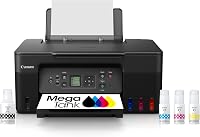
The Canon MegaTank G3270 is a wireless print, copy, and scan model with ink bottles included and a claim of up to 6,000 black-and-white or 7,700 color pages from one set of inks.
Canon says the printer includes up to 2 years of ink, subject to its stated conditions. It prints single-sided, so compare that limit if you often print two-sided pages.
Do you need an all-in-one printer?
An all-in-one printer makes sense when you need printing plus scanning or copying in the same home workspace. It can save room compared with separate devices, though the printer still needs space for trays, paper, and access.
The Canon PIXMA TR8620a combines print, copy, scan, and fax functions. It has automatic two-sided printing, an auto document feeder, and a 200-sheet capacity split between a cassette and rear feed.
The HP Envy 6155 prints, scans, and copies, with automatic two-sided printing and a 100-sheet input tray. HP includes a 3-month Instant Ink trial; a monthly fee applies after that unless you cancel.
The Canon PIXMA TS7720 prints, copies, and scans, with automatic duplex printing and a touchscreen. Canon describes it as a compact home printer, and it supports documents and photos up to 8.5 x 11 in.
Choose an all-in-one if those extra functions will get regular use. If you only print, a simpler single-function model may be easier to place and maintain.
For a small room or shared desk, compare our best small home printer options. If you already prefer HP, see best HP home printer choices.
How should you estimate ink and toner costs?
Estimate supply costs by your real page volume and the type of pages you print. A color page with photos can use supplies differently from a short black text page, so broad page-yield claims are only a starting point.
Before buying, check:
- Whether the printer uses cartridges, toner, or refill bottles.
- The replacement supply names and whether they are easy to find.
- Whether the printer offers a subscription or replenishment plan.
- Whether that service is optional and when charges begin.
- The maker's maintenance instructions for periods without printing.
Don't compare printers by the amount of ink included alone. Consider how often you'll print, the share of pages that use color, and whether you prefer buying supplies as needed or through a plan.
Some printers have cartridge or firmware limits that affect compatible supplies. Read the maker's terms before choosing a model if using third-party cartridges is important to you.
Which printer fits a small home, student desk, or home office?
The best match depends on where the printer will sit and who will use it. Measure the printer's full footprint and allow room to open trays, load paper, and lift the scanner lid.
A student may prioritize low-cost text printing, wireless jobs from a laptop, and copy or scan functions. A home office may need an auto document feeder, fax, or a larger paper supply.
A small desk may call for a compact model, but dimensions alone don't show the room needed to open a rear feed or replace supplies. Check how the paper enters and exits, especially if the printer will sit on a shelf.
Use these topic guides to narrow your choice:
- For schoolwork and study, compare the best printer for students at home.
- For shared work documents, see best all-in-one printer for a home office.
- For a wireless setup, compare the best wireless printer for home use.
- If you print only now and then, start with the best printer for occasional use.
- For an entry-level multifunction option, see best all-in-one printer under 100.
A printer stand can help position a device and keep paper nearby. Check its surface size and load capacity against your printer's dimensions and weight; see best home printer stand options.
What should you check for photo printing and large paper?
For photos, confirm the supported paper size, borderless options, and ink system. For oversized documents, check the exact maximum media size rather than relying on the printer's general description.
Home photo printers commonly use inkjet technology, but the output depends on paper, settings, and the file you send. If you want both photos and everyday documents, see best home printer for photos and documents.
A dedicated photo printer may suit frequent photo output, while a portable model trades paper size and convenience against a larger home unit. Browse our best photo printer for home, best portable printer for photos, and best compact printer for travel guides.
Some craft and design jobs call for sticker paper or larger sheets. Confirm the printer supports the specific media type and dimensions you intend to feed.
- For wide format, compare a best home printer that prints 11x17.
- For craft projects, see best inkjet printer for stickers.
- For paper choices, start with best inkjet printer paper.
Printers that use different ink systems can produce different results on the same paper. Check the printer and paper makers' compatibility guidance before buying supplies.
When should you choose a monochrome or color laser printer?
Choose a monochrome laser when most jobs are black text and you rarely need color. Consider a color laser when you regularly print color charts or office documents and can budget for separate color toner supplies.
Laser models can be larger than basic inkjets, so compare the full dimensions and the space needed to replace toner. Also check whether automatic duplex printing and scanning are included if those features matter.
Our guides cover best laser printer for home use, best monochrome laser printer, best Brother laser printer, and best color laser printer all in one.
Do you need a separate photo, document, or receipt scanner?
A separate scanner can help when you digitize a specific kind of material often. Choose by the originals you have, the size and detail you need, and how many pages you scan in a typical session.
A flatbed scanner gives you a surface for photos, books, or delicate documents. A desktop document scanner is more suited to feeding stacks of loose pages, while receipt workflows may call for software and print functions that work with your bookkeeping routine.
Before choosing, check supported paper sizes, scan resolution, feeder capacity, file formats, and connection method. For old photos, handle originals carefully and compare the best photo scanner for old photos.
For mixed originals, see best flatbed scanner for photos and documents. Offices processing batches can compare desktop document scanner reviews, while small businesses can explore a receipt scanner and printer guide.
A built-in printer scanner may be enough for occasional paperwork. If scanning is a frequent job, a separate device can make the workflow easier to organize.
What ink does your printer need?
Find the exact printer model before buying ink. Cartridges and bottles are model-specific, and a similar printer name does not guarantee the same supply will fit.
Look for the model number on the printer label, in its setup app, or in its settings menu. Then match the manufacturer's recommended supply code and color set.
If you aren't sure which replacement to buy, use our what ink for my printer guide. Keep the model number handy when ordering so you can check compatibility.
How do you choose between budget and premium printers?
Set a budget around the features you will use, then compare the total ownership trade-offs. A lower upfront cost may come with cartridge purchases, while a higher-cost tank model may make sense for heavier printing.
Decide which of these is essential before comparing models:
- Color output or black-only printing.
- Scan, copy, fax, or document feeding.
- Automatic two-sided printing.
- Wireless access for more than one device.
- Larger paper or specialty media support.
- A screen or app controls.
- A supply plan or refill system.
An inexpensive all-in-one can cover basic home tasks, but check its paper handling and replacement supplies. Our best inkjet printer deals guide can help you compare inkjet options, and the best Epson EcoTank printer sale guide focuses on tank models.
Explore printers and scanners by topic
- Best Thermal Printers for Home Use
Which printer should you choose for your home?
Pick an inkjet all-in-one if you need color, photos, and basic scanning in one device. Choose monochrome laser for frequent black text, an ink tank for regular higher-volume printing, and a separate scanner when digitizing photos or document stacks is a major part of your routine.
Before you buy, measure the space, confirm paper sizes and connectivity, and check the exact supplies the printer takes. For a final shortlist, compare our best home printer picks against your most common jobs.
Frequently asked questions
How do I choose a home printer?
Choose a home printer by matching its print type and features to your routine. Inkjet suits mixed color documents and photos, while laser suits frequent text printing.
Check whether you need scanning, copying, faxing, automatic two-sided printing, wireless printing, or a paper size beyond letter.
Is an ink tank printer better for occasional use?
An ink tank can reduce the need to buy individual cartridges, but it may not be the simplest fit if you print only a few pages now and then. Compare the printer's ink system, upkeep guidance, and purchase cost with your actual print volume before deciding.
Do I need a separate scanner at home?
A separate scanner can make sense when you regularly digitize photos, receipts, or stacks of documents and need a workflow suited to that material. For occasional scans, an all-in-one printer may cover basic copying and scanning with one device.
What type of printer do I have?
Check the model name and number on the printer's label, screen, or setup app, then look up its manufacturer specifications. The model details usually identify whether it is inkjet, laser, thermal, or another type, and whether it prints in color or only black.