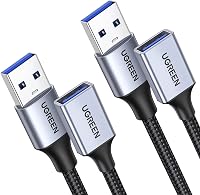
9 Best Anker USB-A Hubs (November 2026)
The best Anker USB 3.0 hubs include the SABRENT 4-Port Powered USB 3.0 Hub for switched desk accessories, the Anker USB Hub 4 Ports with 5Gbps for simple USB-A expansion, and the SABRENT 10-Port Powered USB 3.0 Hub for mixed data and charging.
On this page (8 sections)
- Which Anker USB 3.0 hub is best for your setup?
- Best Anker USB 3.0 hub picks
- How many ports do you need in an Anker USB 3.0 hub?
- Do powered USB hubs work better for external drives?
- USB hub vs USB port: what is the difference?
- What about USB-C, HDMI and SD cards?
- How should you set up and care for a USB 3.0 hub?
- Which is the best Anker USB 3.0 hub?
The best Anker USB 3.0 hub for most USB-A laptops and desktops is the Anker USB Hub 4 Ports with 5Gbps. For another brand, compare the best UGREEN USB-C hubs.
It turns one USB-A port into 4 USB 3.0 data ports, but it does not support charging, so powered alternatives are better for several devices or higher power needs.
This guide compares Anker hubs with powered USB-A hubs that solve the same connection problem. We checked port count, host connection, stated data speed, power design, cable length and the limits that affect everyday use.
If you need the basics first, our guide to USB hubs and adapters explains upstream ports, shared bandwidth and powered designs. For a smaller setup, see the best 4-port USB 3.0 hubs.
Our picks at a glance
-
1
 Best for switched desk accessories
SABRENT 4-Port Powered USB 3.0 Hub
9.7/10 our score
See it on Amazon -
2

-
3
 Best for mixed data and charging
SABRENT 10-Port Powered USB 3.0 Hub
9.5/10 our score
See it on Amazon
- 4
 Check it
ABFCRTTW 4FT 7-Port USB 3.0 Hub Multiport
Best for long desktop reach - 5
 Check it
SABRENT 10-Port 60W Powered USB 3.0 Hub
Best for individually controlled ports - 6
 Check it
SABRENT 4-Port Aluminum USB 3.0 Hub
Best for a compact aluminum hub - 7
 Check it
UGREEN 7-in-1 Powered USB 3.0 Hub
Best for USB-A and USB-C data ports - 8
 Best for USB-C computersCheck it
- 9
 Check it
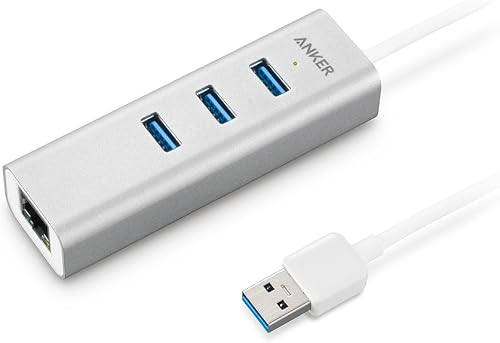
Anker Unibody Aluminum 3-Port USB 3.0
Best for USB and wired Ethernet
Which Anker USB 3.0 hub is best for your setup?
The best choice depends first on the host port on your computer. A USB-A host calls for a hub with a USB-A upstream connection, while a USB-C host needs a USB-C hub or a separate adapter that supports your devices.
For a fuller workstation connection, see Thunderbolt docking stations.
Next, consider what the downstream ports need to do in daily use. Some hubs are for data only, while powered models add external power for drives and peripherals, and a few add dedicated charging ports or wired Ethernet.
Your mix of keyboard, mouse, storage, printer and phone will narrow the choice more than port count alone.
The Anker 4-port USB-A model is the direct match for a simple USB-A setup with low-power accessories. The USB-C model suits a newer computer, and the Ethernet model suits a desktop that needs a wired network connection alongside USB ports.
Our score weighs specs, features and buyer feedback against what you are shopping for. Roundup order follows the score, while the short descriptions explain the trade-offs in power, cable reach, enclosure and control.
Setup also matters before you order. Check the shape of the host port, count how many devices stay connected at once, and note whether any device needs charging or extra power.
A hub that matches those three points will feel simpler to use day to day.
Care is mostly about keeping the cable and host connection secure. Avoid repeated hard bends, keep ports accessible, and use the included power adapter on powered models when several devices are connected.
| Product | Best for | Ports | Power | Size | Our score |
|---|---|---|---|---|---|
| SABRENT 4-Port Powered USB 3.0 Hub | switched desk accessories | 4 USB 3.0 | 2.5A adapter included | 3.5 x 1.5 x 0.5 in | 9.7 |
| Anker USB Hub 4 Ports with 5Gbps | simple USB-A expansion | 4 USB 3.0 per hub | Charging not supported | 9.6 | |
| SABRENT 10-Port Powered USB 3.0 Hub | mixed data and charging | 10 total | 9.5 | ||
| ABFCRTTW 4FT 7-Port USB 3.0 Hub Multiport | long desktop reach | 7 USB 3.0 | 9.4 | ||
| SABRENT 10-Port 60W Powered USB 3.0 Hub | individually controlled ports | 10 USB 3.0 | 9.1 | ||
| SABRENT 4-Port Aluminum USB 3.0 Hub | a compact aluminum hub | 4 USB 3.0 | 8.9 | ||
| UGREEN 7-in-1 Powered USB 3.0 Hub | USB-A and USB-C data ports | 7 total | 24W adapter included | 8.8 | |
| Anker USB C Hub | USB-C computers | 4 USB 3.0 | 8.6 | ||
| Anker Unibody Aluminum 3-Port USB 3.0 | USB and wired Ethernet | 8.3 |
Best Anker USB 3.0 hub picks
The SABRENT 4-Port Powered USB 3.0 Hub ranks first because its 4 data ports, individual switches and 2.5A adapter cover more desk situations than a basic unpowered splitter.
SABRENT 4-Port Powered USB 3.0 Hub: Best for switched desk accessories
- 4 USB 3.0 ports
- Individual LED-lit power switches
- Up to 5Gbps data transfer
- 2.5A power adapter
Individual switches make this powered 4-port hub useful when you want to turn devices on or off without unplugging them. Its thin plastic body and 2.5A adapter suit a compact desk or travel bag.
Pros
- Individual port switches
- Powered design
- USB 2.0 and 1.1 backward compatibility
Cons
- Only 4 ports
- Plastic enclosure
The SABRENT 4-Port Powered USB 3.0 Hub adds 4 USB 3.0 ports to a compatible desktop or laptop. Its individual power switches and LED indicators let you control each port separately, which is useful when a drive, printer or accessory does not need to stay on.
That control suits a desk where some devices are used only at certain times. You can switch a printer, card reader or spare drive off without reaching behind the hub, and the LED gives a quick sign that the port is active.
USB 3.0 data transfer reaches up to 5Gbps. It also works with USB 2.0 and USB 1.1 devices, although older devices remain limited by their own standard, so a USB 2.0 flash drive will not gain USB 3.0 speed.
The included 2.5A power adapter makes this a better fit than an unpowered hub when several peripherals are connected. The 3.5 x 1.5 x 0.5 in plastic body is thin enough for a compact desk or travel setup, at 1.5 ounces.
Set it up by connecting the hub, attaching the power adapter and switching on only the ports you need. Keep the cable free from sharp bends and use the switches to reduce power waste when a device is idle.
Choose it when you want 4 ports and direct control over each one. If you need 7 or more ports, a larger powered SABRENT is a better match.
Anker USB Hub 4 Ports with 5Gbps: Best for simple USB-A expansion
- 4 USB 3.0 ports
- Up to 5Gbps data transfer
- Slim plastic body
- Pack of 2
This Anker USB hub turns one USB-A port into 4 data ports and comes as a pack of 2. It fits buyers who need simple expansion for keyboards, mice and storage, but it is not designed to charge devices.
Pros
- Anker brand
- 5Gbps data transfer
- Pack of 2
Cons
- No charging support
- Not powered
The Anker USB Hub 4 Ports with 5Gbps is the direct answer for a USB-A laptop or desktop that needs more data ports without charging. Each hub has 4 USB 3.0 ports and supports data transfer up to 5Gbps.
This is a pack of 2, so it suits a home and office setup or two computers with USB-A ports. The slim plastic body measures 4.23 x 1.23 x 0.39 in, and the 0.7 ft USB-A connection keeps the hub close to the host device.
Anker describes the hub as heat-resistant and durable. The important limit is that charging is not supported, so use it for keyboards, mice, flash drives and other data accessories rather than as a charging station.
Choose it when you want a simple Anker USB 3.0 hub for USB-A computers. If you need external power or charging ports, move to one of the powered picks below.
SABRENT 10-Port Powered USB 3.0 Hub: Best for mixed data and charging
- 10 total ports
- 7 USB 3.0 data ports
- 3 dedicated charging ports
- 60W power adapter
Seven USB 3.0 data ports and 3 dedicated charging ports give this powered hub the widest mix of connections here. Individual switches and LEDs help you control each port.
Pros
- 10 ports
- Dedicated charging ports
- 60W adapter
Cons
- Larger 5.7 x 1.9 x 0.94 in body
- Needs external power
The SABRENT 10-Port Powered USB 3.0 Hub is the strongest choice for a mixed workstation because it combines 7 USB 3.0 data ports with 3 dedicated charging ports. The 60W, 12V/5A adapter supports the powered design.
The 3 charging ports can deliver up to 2.4A per port, while the 7 data ports support transfer speeds up to 5Gbps. You can charge on the dedicated ports while using the data ports for peripherals and storage, which keeps charging separate from everyday data use.
Every port has its own power switch and LED indicator. That helps when a drive, printer or accessory should stay off until you need it, and it avoids unplugging devices to power them down.
The aluminum body measures 5.7 x 1.9 x 0.94 in, so plan for more desk space than a 4-port hub. It suits a fixed workstation more than a travel bag, and the external adapter needs a nearby outlet.
Choose this model when charging and data connections need to share one hub. If every port only needs USB 3.0 data, the 10-port SABRENT HB-BU10 is a more uniform layout.
ABFCRTTW 4FT 7-Port USB 3.0 Hub Multiport: Best for long desktop reach
- 7 USB-A ports
- 4 ft cable
- Up to 5Gbps data transfer
- Aluminum enclosure
The 4 ft cable gives this 7-port hub more placement flexibility than the shorter hubs. It is suited to desktop data connections, but its stated use is data transmission rather than charging.
Pros
- 7 ports
- Long cable
- Aluminum body
Cons
- No charging
- USB-A port layout only
The ABFCRTTW 4FT 7-Port USB 3.0 Hub Multiport suits a desktop where the computer sits away from the accessories. Its 4 ft cable gives you more placement freedom than the shorter cables in this roundup.
The aluminum hub has 7 USB 3.0 ports and supports data transfer up to 5Gbps. Its stated function is data transmission, not charging, so it is a poor fit for someone looking for a phone or tablet charging hub.
The long cable can help place the ports beside a monitor, on a desk shelf or closer to a keyboard and mouse. That reach is the main benefit for a tower under a desk or a laptop that stays in one position.
The operating system information includes Windows, Mac OS, Linux, Chrome OS and Unix. Plug and play setup means the main task is routing the cable so it does not pull on the host connection.
Choose it for long-reach data expansion with keyboards, mice and drives. If power management matters, choose a powered hub with a stated adapter and port controls.
SABRENT 10-Port 60W Powered USB 3.0 Hub: Best for individually controlled ports
- 10 USB 3.0 ports
- Individual switches and LEDs
- 60W power adapter
- USB 3.0 cable and manual included
This SABRENT gives every one of its 10 USB 3.0 ports a separate switch and blue LED. It suits a workstation with many USB devices that need individual control.
Pros
- 10 data ports
- Switches on every port
- 60W adapter included
Cons
- ABS enclosure
- Needs external power
The SABRENT 10-Port 60W Powered USB 3.0 Hub gives you 10 USB 3.0 data ports, each with its own power switch and blue LED. It is a strong fit for a workstation with many drives, card readers, keyboards or other USB peripherals.
The included 60W 12V/5A adapter supplies the external power for the hub. Data transfer reaches up to 5Gbps, and the hub supports USB 2.0 and USB 1.1 devices with their slower standard speeds.
The package includes a USB 3.0 cable and user manual. Its 5.7 x 1.9 x 0.94 in ABS body is the same stated size class as the larger SABRENT 10-port model above, but this version uses 10 data ports instead of 7 data ports plus 3 dedicated charging ports.
Individual switches make daily control easier when not every device is needed at once. You can turn a spare drive or printer off at the hub instead of unplugging it, and the blue LED shows the state of each port.
Choose it when individual control over 10 data ports matters most. Pick the HB-B7C3 if you specifically need dedicated charging ports.
SABRENT 4-Port Aluminum USB 3.0 Hub: Best for a compact aluminum hub
- 4 USB 3.0 ports
- 2.5 ft cable
- Aluminum enclosure
- Up to 5Gbps data transfer
This compact aluminum hub adds 4 USB 3.0 ports with a 2.5 ft cable. Choose it when you want a simple data hub with more cable reach than an ultra-short adapter.
Pros
- Aluminum enclosure
- 2.5 ft cable
- USB 2.0 and 1.1 backward compatibility
Cons
- No external power listed
- Only 4 ports
The SABRENT 4-Port Aluminum USB 3.0 Hub is a compact option for adding 4 USB 3.0 data ports to a compatible computer. Its aluminum enclosure and 2.5 ft cable make it a practical choice when a very short connection would be awkward.
It supports data transfer up to 5Gbps and works backward with USB 2.0 and USB 1.1 devices. The hub is compatible with Windows, Mac and Linux systems, and its stated setup is plug and play with hot swappable use.
The body is listed at 3.54 x 1.18 x 1.97 in and 2.5 ounces, so it can sit beside a laptop or travel in a bag. It does not have the individual switches of the powered SABRENT 4-port model, so you control devices by disconnecting them or using the computer's own controls.
The longer cable helps when the host port is at the back of a desktop or on the far side of a laptop. Route it so the hub stays accessible without hanging from the port under the weight of connected devices.
Choose it for simple data expansion in an aluminum body. If you expect several power-hungry devices, use a hub with an external adapter.
UGREEN 7-in-1 Powered USB 3.0 Hub: Best for USB-A and USB-C data ports
- 5 USB-A and 2 USB-C data ports
- Individual switches
- 24W power adapter
- 3.3 ft cable
Five USB-A and 2 USB-C data ports give this powered hub a flexible layout for newer and older peripherals. All ports share one 5Gbps upstream channel, so simultaneous transfers divide that bandwidth.
Pros
- USB-A and USB-C data ports
- Individual switches
- 24W adapter
Cons
- Shared upstream bandwidth
- Does not charge the host laptop
The UGREEN 7-in-1 Powered USB 3.0 Hub is the most flexible pick for a USB-A computer that needs 5 USB-A and 2 USB-C data ports. All 7 ports support up to 5Gbps through one shared upstream channel.
The included 24W power adapter helps keep multiple peripherals connected. A single port can provide up to 7.5W under suitable conditions, but available power is shared when several devices are connected, and the hub does not charge the host laptop.
Each port has an on/off switch. That lets you control a printer, drive or accessory without unplugging it, and it can help when a device should not stay active all day.
The 3.3 ft cable helps place the hub beside a laptop stand, desktop tower or under-desk workstation. Keep the cable route tidy so the hub does not shift when you plug in a drive or card reader.
Choose it when your accessories use both USB-A and USB-C data connections. If you need a hub for a USB-C host, use the Anker USB C Hub below instead.
Anker USB C Hub: Best for USB-C computers
- 4 USB 3.0 ports
- USB-C connection
- Aluminum design
- Up to 5Gbps data transfer
This Anker hub is for a computer or smart device with a USB-C port that needs 4 USB 3.0 ports. Its compact aluminum design fits newer systems, but high-power devices such as external hard drives are not recommended with it.
Pros
- USB-C host connection
- Aluminum enclosure
- 5Gbps data transfer
Cons
- Not for USB-A host ports
- High-power devices are not recommended
The Anker USB C Hub turns one USB-C port into 4 USB 3.0 ports. For adapter and hub options, compare USB-C to USB-A adapters and hubs.
It is the right Anker option for a USB-C laptop, desktop or smart device that needs USB-A accessories.
The aluminum hub supports data speeds up to 5Gbps and has a compact design suited to newer computers. Compatibility information includes laptops, desktops, MacBooks, iPads and iPhones, with Chromebook listed as the operating system.
Anker advises against using it with high-power devices such as external hard drives. That makes it better for keyboards, mice, flash drives and other lower-power accessories than for a heavily loaded storage setup.
Choose it when your host port is USB-C. If your computer has USB-A, the 4-port Anker USB-A hub is the closer match.
Anker Unibody Aluminum 3-Port USB 3.0: Best for USB and wired Ethernet
- 3 USB 3.0 ports
- Gigabit Ethernet port
- 1.3 ft cable
- Aluminum unibody design
This Anker hub combines 3 USB 3.0 ports with Gigabit Ethernet in an aluminum body. It suits a desktop setup that needs wired networking and a few USB-A connections in one unit.
Pros
- Gigabit Ethernet
- 3 USB 3.0 ports
- Aluminum body
Cons
- Only 3 USB ports
- Short 1.3 ft cable
The Anker Unibody Aluminum 3-Port USB 3.0 and Gigabit Ethernet Hub suits a desktop that needs 3 USB 3.0 ports and wired networking in one compact unit. If you need wireless networking, compare USB Wi-Fi adapters for PCs.
Its Gigabit Ethernet port is backward compatible with 10/100 Ethernet.
The hub uses a 1.3 ft USB 3.0 cable and an aluminum unibody design. A green LED indicates normal operation, while built-in surge protection and hot swapping are part of its stated feature set.
This is the smallest USB expansion option in the roundup, with 3 USB ports rather than 4, 7 or 10. Its value comes from combining USB data connections with Ethernet rather than maximizing the port count.
Choose it when wired Ethernet is part of the setup. If you only need USB-A ports, a 4-port hub gives you more connections.
How many ports do you need in an Anker USB 3.0 hub?
Choose 4 ports for a keyboard, mouse, flash drive and one spare connection. That spare matters in daily use, because a spare port is where a temporary drive, phone cable or card reader goes without unplugging something else.
Move to 7 ports when you regularly connect storage, a printer and several desk accessories. This size suits a laptop that stays at a desk, where the same keyboard, mouse, drive and printer remain connected through the working day.
A 10-port model makes more sense for a fixed workstation than a travel setup. Larger hubs take more desk space and often need a wall outlet for external power, which is fine for a permanent desk but awkward for a small bag.
Count the devices you use at the same time, then leave at least one open port for a temporary drive or phone connection. Also count charging separately, because a hub with dedicated charging ports uses some of its total ports for that job.
Our guide to the best 7-port USB hubs is useful when 4 ports are too limiting but 10 ports would take more space than you need. It helps you judge whether the middle option gives enough room for storage and peripherals.
Think about placement as well as count. A hub with a longer cable can sit where you reach it, while a short hub may crowd the side of a laptop with cables.
If you travel with a laptop, a smaller hub is easier to carry and set up. For a desk that never moves, more ports and external power are usually the simpler long-term choice.
Do powered USB hubs work better for external drives?
A powered hub is the safer choice when several connected devices need power from the hub. The SABRENT 4-port includes a 2.5A adapter, the larger SABRENT models include 60W adapters, and the UGREEN hub includes a 24W adapter.
External power helps when external drives, printers or several peripherals stay connected at once. It also reduces reliance on the host port alone, which can matter when a laptop is already running a display, keyboard and mouse through other connections.
Power does not remove the shared data limit. The UGREEN hub sends all 7 data ports through one shared 5Gbps upstream channel, so simultaneous transfers can reduce the speed available to each port.
That shared path also applies to other hubs, even when the stated top speed is high. A single drive copying files may use the channel well, while two drives copying at once will divide it.
An unpowered Anker hub is simpler for lower-power data accessories. It is a neat option for a keyboard, mouse and flash drive, where the main need is extra ports rather than extra power.
Check the computer's available power and the needs of each connected device before adding external storage or other higher-power equipment. If a device is unreliable, first check the power adapter, cable and host connection before changing the hub.
USB hub vs USB port: what is the difference?
A USB port is a connection built into your computer, while a USB hub shares one host connection across several downstream ports. The hub adds convenience, but the connected ports still share the host connection's data path.
Our explanation of USB hub vs USB port covers the difference in more detail. It also helps explain why adding more ports does not create a separate full-speed connection for every device.
For a USB-A computer, choose a hub with a USB-A host connection. For a USB-C computer, choose a USB-C hub or confirm that any adapter supports the devices you plan to connect.
What about USB-C, HDMI and SD cards?
USB-C is the host connection on the Anker USB C Hub, while the UGREEN hub uses USB-A for the computer connection and adds USB-C data ports for accessories. These are different jobs, so check both ends before ordering.
If you are comparing wider USB-C expansion options, see our guide to the best USB-C hubs. It covers the broader category beyond the USB-A-focused picks here.
An HDMI port is not included in the products in this roundup. Our guide to a USB 3.0 hub with HDMI explains what to check when video output is part of your setup, while the USB-C to HDMI adapter or cable guide covers the connection choice separately.
For camera storage, check whether you need a dedicated card reader. Our explanation of what an SD card reader is can help before you choose a hub with that feature.
How should you set up and care for a USB 3.0 hub?
Connect the hub to a compatible host port first, then attach the power adapter when the hub requires external power. Powered models should use the included adapter, especially when several devices are connected.
Keep the hub and its cable free from sharp bends and avoid pulling the hub by the cable. Leave enough space around a powered unit for the ports and switches to remain accessible.
USB 3.0 devices can share a channel, so move a large transfer to a quieter period when several drives are active. If a device disconnects, check the host connection, power adapter, cable and the device's own USB standard before changing the hub.
Which is the best Anker USB 3.0 hub?
The Anker USB Hub 4 Ports with 5Gbps is the best direct Anker choice for a USB-A laptop or desktop that needs 4 data ports and no charging. It turns one USB-A port into 4 USB 3.0 data ports for keyboards, mice, flash drives and similar accessories.
The SABRENT 4-Port Powered model is a better all-around pick when individual switches and external power matter more than the Anker name. Its 2.5A adapter and per-port switches suit a desk where devices are turned on and off through the day.
Pick the SABRENT 10-Port Powered model with 3 charging ports for mixed charging and data. The 7 data ports handle peripherals and storage, while the dedicated charging ports keep phones and tablets separate from that data use.
Choose the UGREEN 7-in-1 for a USB-A computer with both USB-A and USB-C accessories. Its 5 USB-A and 2 USB-C data ports, individual switches and 24W adapter make it flexible for newer and older peripherals together.
Choose the Anker USB C Hub when the host computer has USB-C. It turns one USB-C port into 4 USB 3.0 ports, which is the right direction for a newer laptop or smart device.
For wired networking, the Anker Ethernet model is the different answer, because it combines 3 USB 3.0 ports with Gigabit Ethernet. Before ordering any of these, check the host port shape, count your simultaneous devices and confirm whether you need charging.
That short check prevents the most common mistake in this category. A data-only hub will not charge a phone, and a USB-A hub will not fit a USB-C-only computer without a suitable adapter.
Our top 3 picks at a glance
-
1
Best for switched desk accessories
SABRENT 4-Port Powered USB 3.0 Hub
9.7/10 our score
See it on Amazon -
2
-
3
Best for mixed data and charging
SABRENT 10-Port Powered USB 3.0 Hub
9.5/10 our score
See it on Amazon
Frequently asked questions
What is the best Anker USB 3.0 hub for a USB-A laptop?
The Anker USB Hub 4 Ports with 5Gbps is the clearest match when your laptop has a USB-A port and you need 4 USB 3.0 data ports. It does not support charging, so choose a powered alternative when several connected devices need more available power.
Check the host port shape before ordering.
Does an Anker USB 3.0 hub charge devices?
The 4-port Anker USB Hub in this guide is explicitly not designed to charge devices. The Anker USB C Hub is presented as a data hub, while the Anker Ethernet model combines USB data ports with wired networking.
For charging, compare a powered hub with clearly stated charging ports.
Is USB 3.0 faster than USB 2.0?
USB 3.0 supports data transfer up to 5Gbps in the products here, while USB 2.0 supports up to 480Mbps. Actual transfers also depend on the computer, hub, cable and connected storage device.
A USB 3.0 hub does not make a USB 2.0 host port operate at USB 3.0 speed.
Should I buy a powered USB hub?
Choose a powered USB hub when you plan to connect several devices, use external drives or need charging ports. The SABRENT picks include external power adapters, while the Anker 4-port data hub is a simpler option for low-power peripherals.
Match the adapter and port layout to your setup.
Can a USB-A hub work with a USB-C computer?
A USB-A hub needs a compatible USB-A host connection unless you use a suitable adapter. If your computer has USB-C, the Anker USB C Hub provides 4 USB 3.0 ports through a USB-C connection.
For a wider mix of USB-A and USB-C data ports, consider the powered UGREEN 7-in-1.