Wi-Fi vs Bluetooth Printers: Which Is Best? (November 2026)
Choose Wi-Fi for shared printing across a home or office, and Bluetooth for short-range printing from a nearby device. The right wireless printer vs Bluetooth printer choice depends on distance, device support and whether several people need access.
On this page (9 sections)
- Wireless printer vs Bluetooth printer: what is the main difference?
- Is Wi-Fi better for several people?
- When is Bluetooth the better printer connection?
- Wireless printer vs Bluetooth printer for phones and tablets
- Does Wi-Fi need the internet to print?
- Which connection is easier to set up?
- Which printer type fits your work?
- How should you choose between these four products?
- Wireless printer vs Bluetooth printer: which should you choose?
Choose Wi-Fi for shared printing across a home or office, and Bluetooth for short-range printing from a nearby device. The wireless printer vs Bluetooth printer decision depends on range, device support, setup and whether one person or several people will print.
Wi-Fi printers join a wireless network, so phones, tablets and computers can usually send jobs from different rooms. Bluetooth printers connect directly over a shorter range, which can make them useful for one nearby device or a compact label-printing station.
The connection is only one part of the decision. You should also compare printer type, color support, print speed, paper or label size, and whether you need copying or scanning.
Wireless printer vs Bluetooth printer: what is the main difference?
A Wi-Fi printer connects through a network, while a Bluetooth printer usually connects directly to a nearby device. Both are wireless, but they solve different access problems.
Wi-Fi is designed for network access. Once the printer is connected to your home or office network, compatible devices on that network can send jobs without pairing with the printer each time.
Bluetooth is designed for short-range device connections. The phone, tablet or computer must support the printer's Bluetooth method, and some models require a specific mobile app before printing works.
The term wireless printer can therefore describe more than one connection type. Always check whether a model supports Wi-Fi, Bluetooth, USB, Ethernet or a combination of these.
The home printer buying guide explains the other choices that matter, including printer type, supplies and everyday features.
Is Wi-Fi better for several people?
Wi-Fi is usually the better choice when several people need to print from different devices. A shared network lets compatible users send documents without keeping one phone or computer beside the printer.
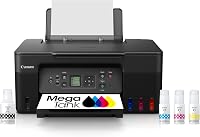
The Canon MegaTank G3270 supports wireless print, copy and scan functions. It works with smartphones and tablets, and its app-based control suits a household that prints color documents, school work and forms from mobile devices.
The Brother DCP-L2640DW is aimed at shared black and white document work. For other networked office options, see wireless printers for home offices.
Its dual-band wireless connection supports 2.4 GHz and 5 GHz networks, while Ethernet and USB provide alternatives when the network is not the right route.
For a broader shortlist, compare these models with the best wireless printer for home use and the best wireless printer for office use.
Wi-Fi can also make printer placement easier. You can keep the printer near a desk, shelf or shared work area instead of attaching it directly to one computer, as long as the network signal reaches that location.
If space is limited, compare compact wireless printers for home.
When is Bluetooth the better printer connection?
Bluetooth is a good fit when the printer stays near one device and the job does not need network sharing. It can reduce the need to join a home network, but app and operating system support still matter.
The JADENS Bluetooth Thermal Shipping Label Printer is a print-only label device with 203 DPI resolution. It supports 4 x 6 in media and label widths from 1.57 to 4.1 in, and it prints without ink or toner.
The JADENS connection details vary by device. Windows 8 or later and Mac computers can print through Bluetooth, while Android and iOS phones need the JADENS printer app.
The KNAON Bluetooth Thermal Shipping Label Printer also suits short-range label work, but it adds USB connectivity. Its Bluetooth printing uses the FlashLabel Pro app, and its USB connection supports macOS, Windows, ChromeOS and Linux.
The best Bluetooth printers for home guide is useful if your main goal is short-range printing from a phone, tablet or nearby computer.
Bluetooth is less suitable when people in several rooms need access. Pairing, app requirements and short range can add friction when the printer is shared.
Wireless printer vs Bluetooth printer for phones and tablets
Check the exact mobile connection before buying because phones may use an app even when a printer is described as Bluetooth. A device can have Bluetooth hardware without supporting ordinary phone printing in the way you expect.
The Canon G3270 supports smartphones and tablets through app control. That makes it a practical fit for mobile color printing, copying and scanning in a home setting.
The JADENS printer supports Android and iOS through its JADENS printer app. Its computer connection differs, with Bluetooth support for Windows 8 or later and Mac, plus USB for Windows 7 or newer and Mac OS 10.9 or newer.
The KNAON printer requires the FlashLabel Pro app for Bluetooth printing. Its app also handles label templates, icons and fonts, so the app is part of the printing workflow rather than an optional extra.
Before buying, confirm these details:
- Does your phone or tablet support the required app?
- Does the app import the file type you need?
- Does the printer need Bluetooth pairing or app-based discovery?
- Can the printer use USB if mobile printing fails?
- Will the printer remain close enough to the device?
If you print from a MacBook, also compare the connection and operating system requirements in the best wireless printer for MacBook guide.
Does Wi-Fi need the internet to print?
Wi-Fi printing can work without internet access when the device and printer remain connected to the same local network. Internet access and Wi-Fi are related but not identical.
A router can create a local wireless network even when its internet service is unavailable. The printer and computer or phone still need a working connection to that network, and the printer's setup process may require an app.
Some cloud, remote or account-based features may need internet access. Local printing is the part that can often continue without it.
This is different from Bluetooth printing, which can connect directly between nearby devices without joining a Wi-Fi network. The all-in-one computer internet guide explains the broader difference between local device use and internet access.
Which connection is easier to set up?
Bluetooth can be simpler for one nearby device, while Wi-Fi is more useful after a shared setup is complete. The easier option depends on how many devices you need to connect.
With Wi-Fi, you normally connect the printer to the network, install or open the required software, and select the printer from a compatible device. Network names, passwords and band support can affect setup.
The Brother DCP-L2640DW supports 2.4 GHz and 5 GHz wireless, Ethernet and USB. That gives an office several ways to connect, which can help when a wireless setup is not suitable for a particular computer.
With Bluetooth, pairing and app support are central. The JADENS printer can use Bluetooth on supported Windows and Mac computers, but mobile users need its app.
The KNAON printer also uses its FlashLabel Pro app for Bluetooth printing.
USB can be a useful fallback for both types of work. It avoids wireless range and network issues, but it normally limits the printer to a directly connected computer unless the computer shares it with other devices.
Which printer type fits your work?
Choose an all-in-one Wi-Fi printer for documents, color pages, copying and scanning, and choose a Bluetooth thermal printer for labels. Connection choice cannot make a print-only label printer replace a document printer.
The Canon G3270 is the color all-in-one option here. It includes print, copy and scan functions, uses black and color ink bottles, and has an 11-page-per-minute black and white speed and 6-page-per-minute color speed.
It uses single-sided printing, so it suits users who value color and ink-tank page volume more than automatic 2-sided output. Its 1.35 in LCD gives the printer a built-in display for basic control.
The Brother DCP-L2640DW is a monochrome multifunction printer. It prints up to 36 pages per minute, includes automatic duplex printing and has a 50-page automatic document feeder for multi-page scanning and copying.
It suits small offices and home workspaces that mainly produce black and white documents. It is heavier and larger than the label printers, but its document features are much broader.
The JADENS and KNAON models are thermal label printers. They print black labels, use simplex printing and are designed for shipping or small label jobs rather than regular letter-size document printing.
The best color laser printer for office use guide can help if your priority is shared office color output rather than thermal labels or an ink-tank home printer.
How should you choose between these four products?
Pick the Canon for wireless home color work, the Brother for shared monochrome documents, the JADENS for straightforward Bluetooth labels, and the KNAON for Bluetooth labels with USB and app templates.
The Canon is the most flexible for a household that needs color pages, copies and scans. Its wireless connection and mobile support are useful when several people print from phones or tablets.
The Brother is the stronger office choice for black and white output. Its 36-page-per-minute speed, automatic duplex printing, dual-band wireless, Ethernet and USB cover more shared-workspace situations.
The JADENS keeps the label workflow focused. It supports Bluetooth and USB, works with fanfold and roll labels, and accepts label widths from 1.57 to 4.1 in.
The KNAON adds a second computer connection and a wider platform range. Its app-based workflow supports templates, icons and fonts, while its supported paper widths run from 1.5 to 4.2 in.
For any printer, check the paper or label size before ordering. A connection can be compatible while the media format is wrong for the job.
Wireless printer vs Bluetooth printer: which should you choose?
Choose a Wi-Fi printer when several devices need shared access, and choose Bluetooth when one nearby device will handle short-range printing. Then match the printer type to the work: documents and scans need an all-in-one, while shipping labels need a thermal label printer.
Choose the Canon MegaTank G3270 for wireless color printing, copying and scanning at home. Choose the Brother DCP-L2640DW for faster black and white office documents with automatic duplex printing.
Choose the JADENS Bluetooth Thermal Shipping Label Printer for a compact label workflow with Bluetooth and USB. Choose the KNAON Bluetooth Thermal Shipping Label Printer when app templates, USB and broader computer platform support matter more.
The best wireless printer vs Bluetooth printer choice is the one that matches your devices, distance and daily print jobs. A shared Wi-Fi printer is usually the safer household or office choice, while Bluetooth is practical for a focused label station.
Frequently asked questions
Do wireless printers use Bluetooth?
Some wireless printers use Bluetooth, but wireless does not always mean Bluetooth. Wi-Fi is another wireless connection, and it usually connects a printer to your home or office network.
Check the exact printer's connection options before buying because a Wi-Fi printer may not support Bluetooth.
Is Wi-Fi better than Bluetooth for a printer?
Wi-Fi is usually better for shared printing, longer range and several devices on one network. Bluetooth can be better for a nearby phone or computer when you want a direct short-range connection.
Your best choice depends on device support, distance and how many people will print.
Can a Bluetooth printer connect to Wi-Fi?
A Bluetooth printer cannot automatically connect to Wi-Fi. Bluetooth and Wi-Fi are separate connection methods, so the printer must include Wi-Fi hardware if you want network printing.
A model with Bluetooth and USB gives you those connection choices, but USB does not add Wi-Fi.
Can you print without internet with Wi-Fi?
Yes, you can often print over a local Wi-Fi network without an active internet connection. Your device and printer still need to connect to the same working network, and the printer's setup method may require an app or computer.
Internet access may be needed for cloud features.
Are Bluetooth printers good for home use?
Bluetooth printers can suit home users who print from one nearby device, especially for labels or occasional small jobs. They are less convenient when several people need access from different rooms.
For shared documents, a Wi-Fi printer usually offers a more practical connection.